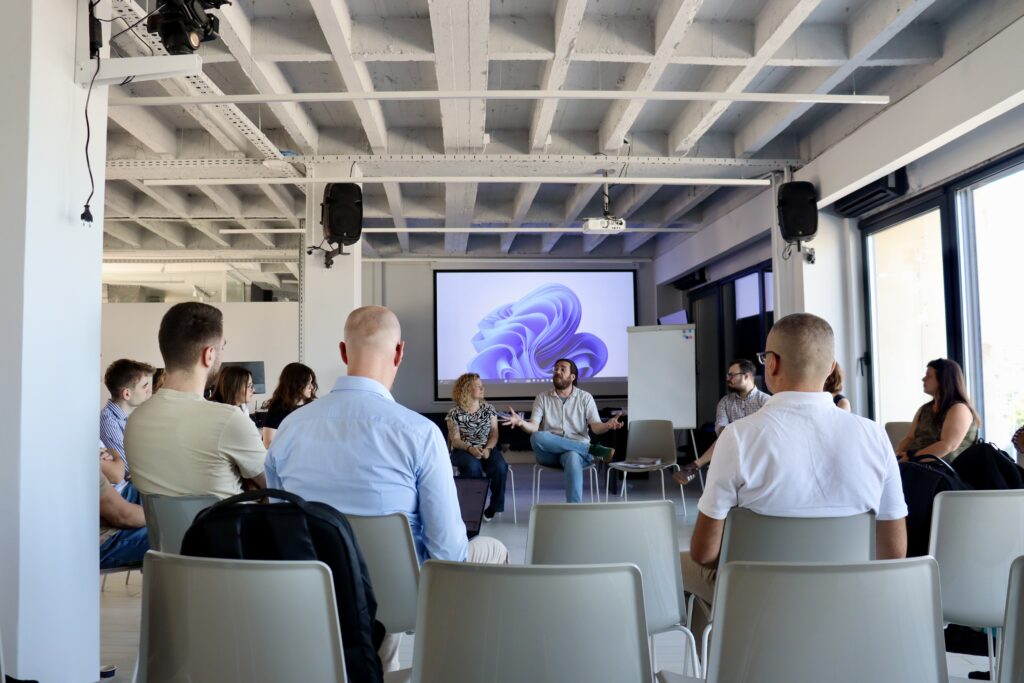
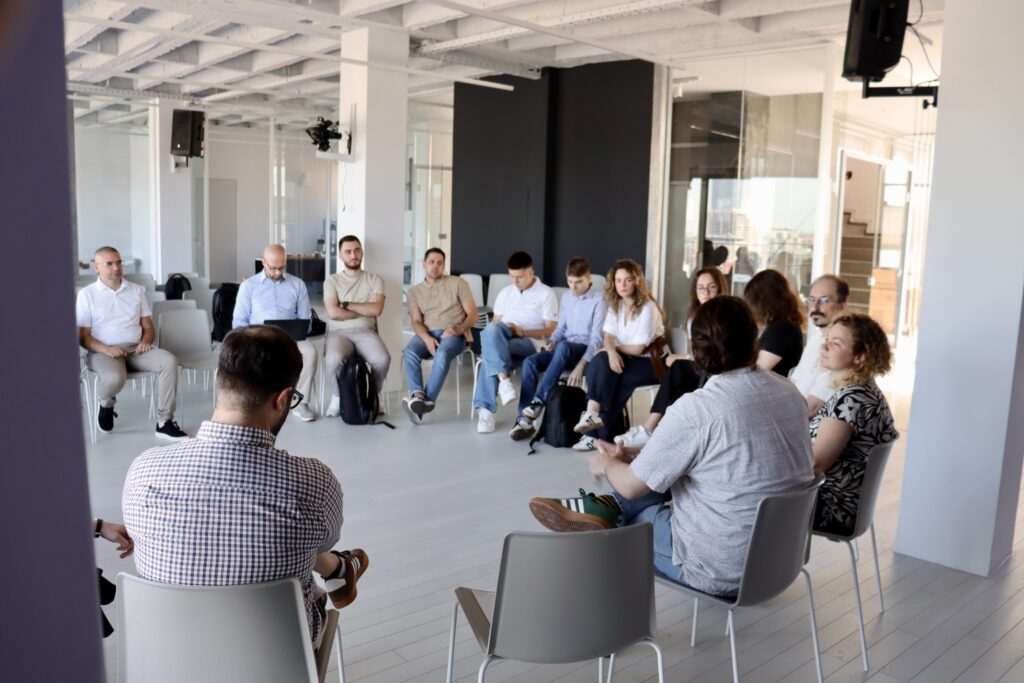
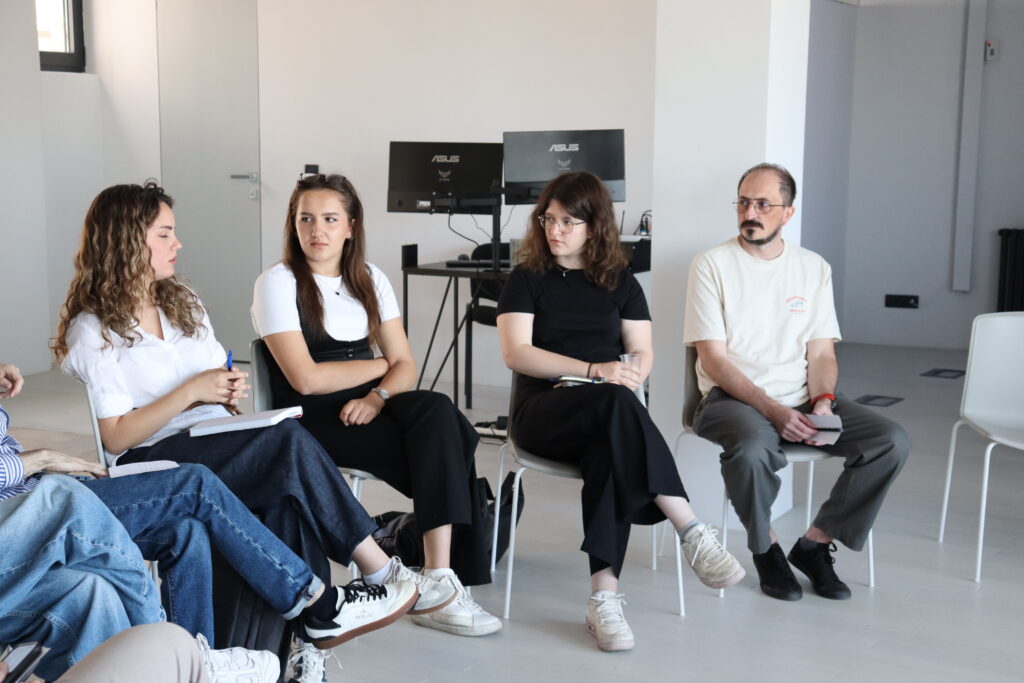
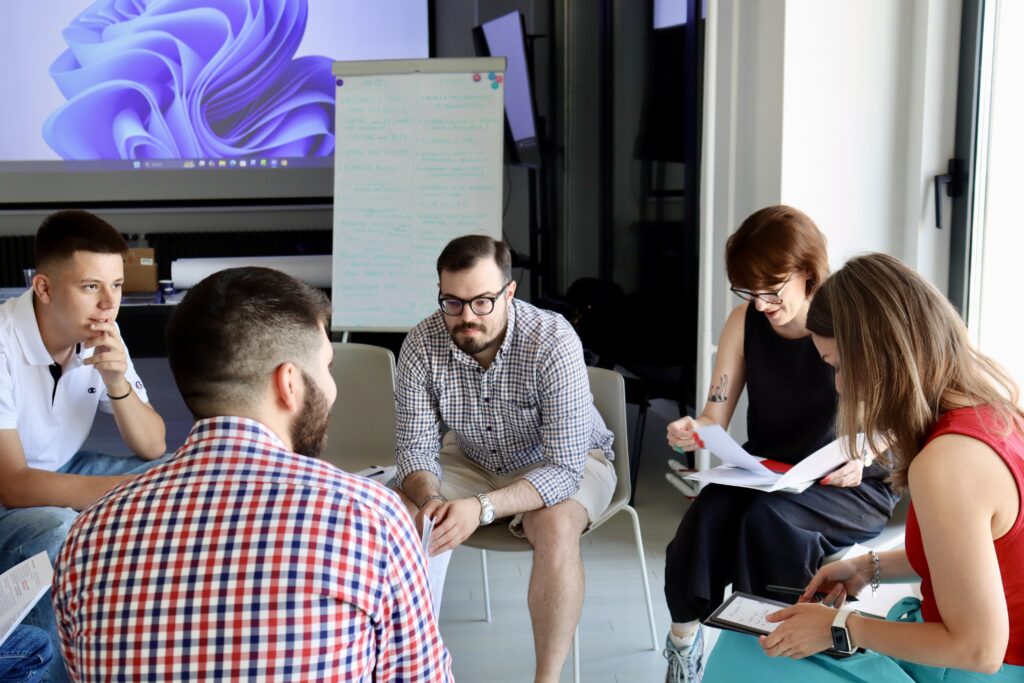
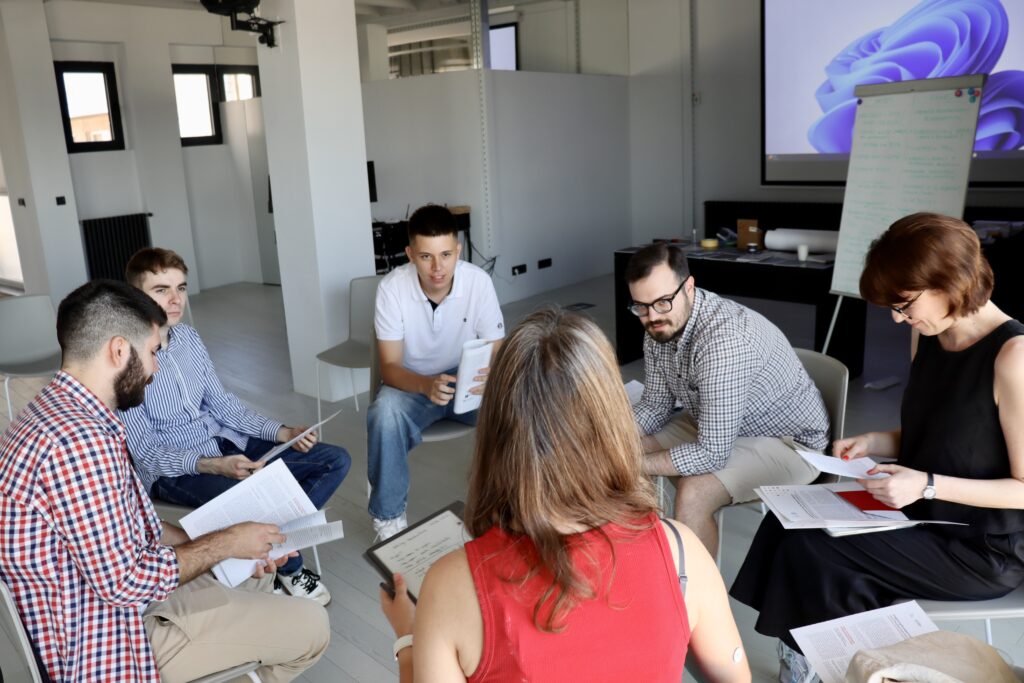
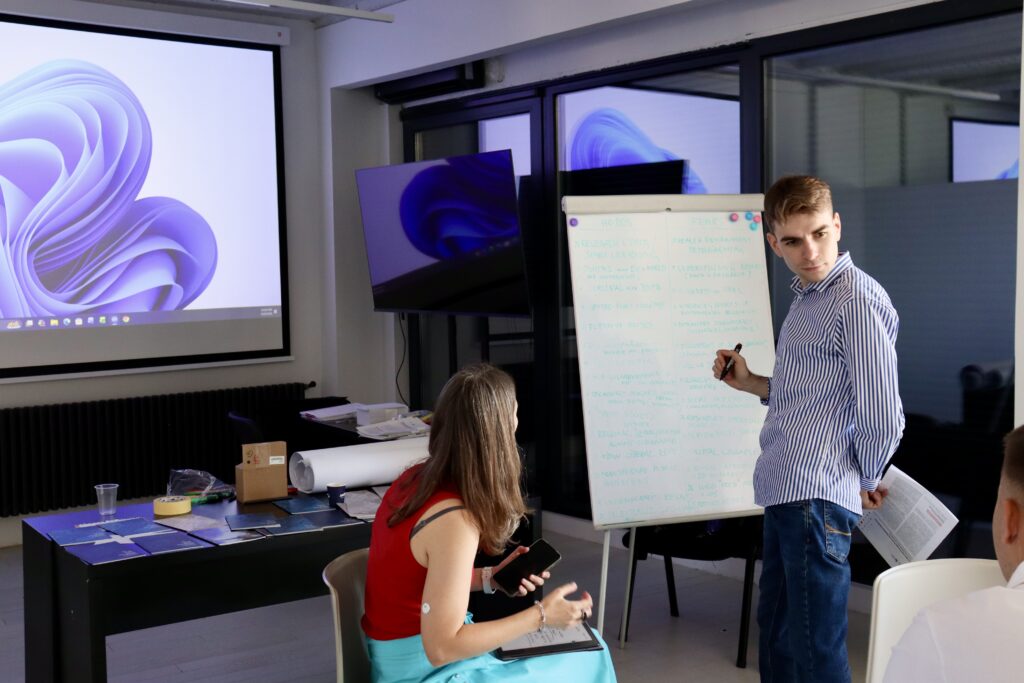
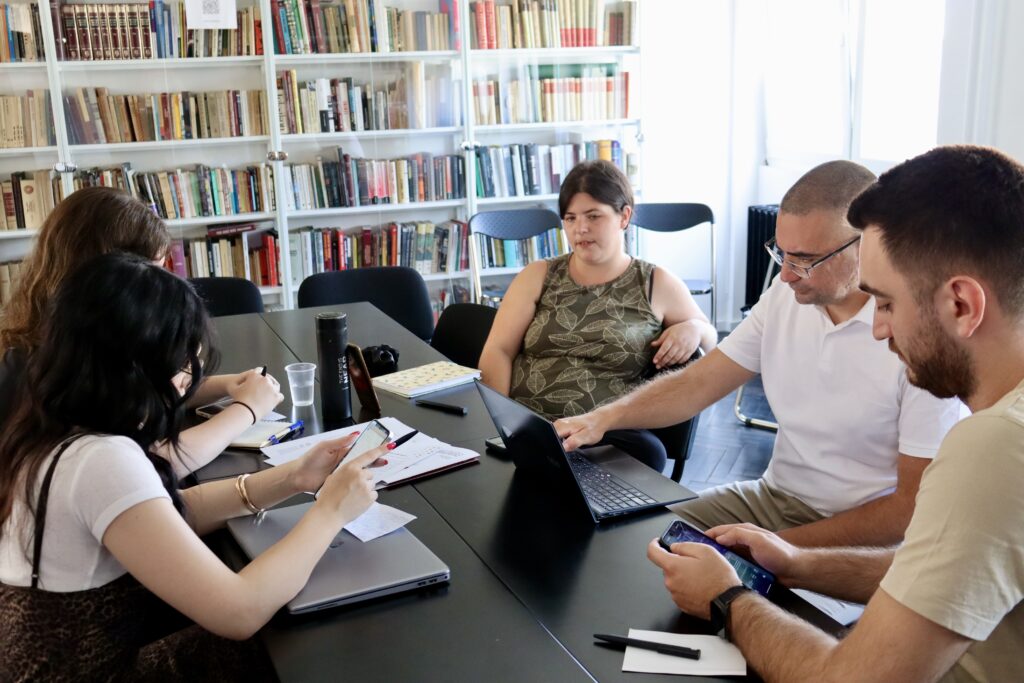
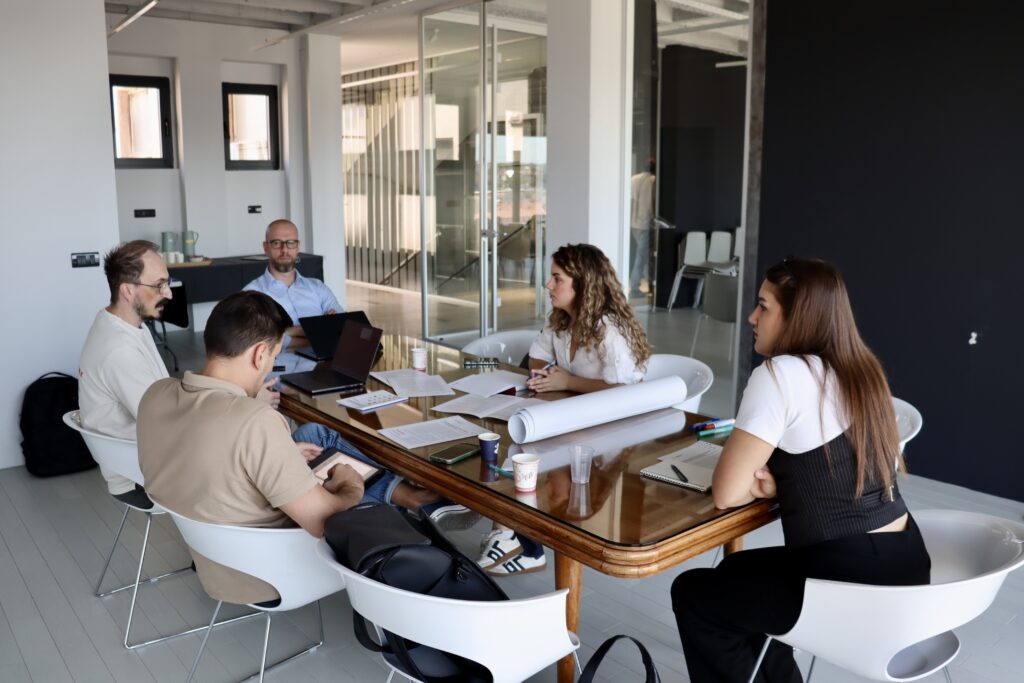
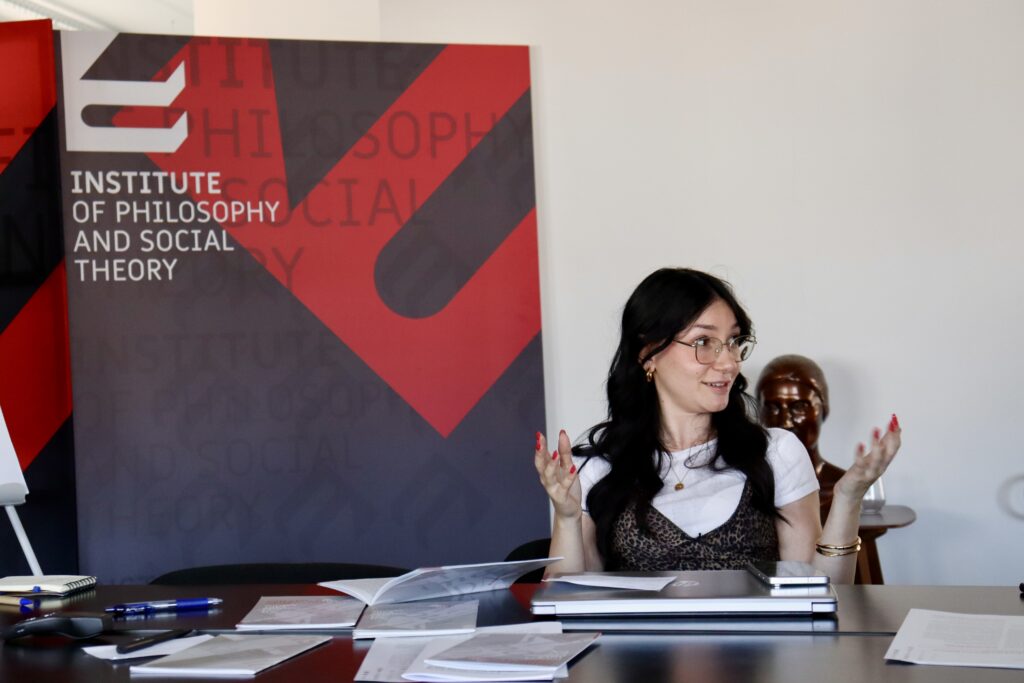
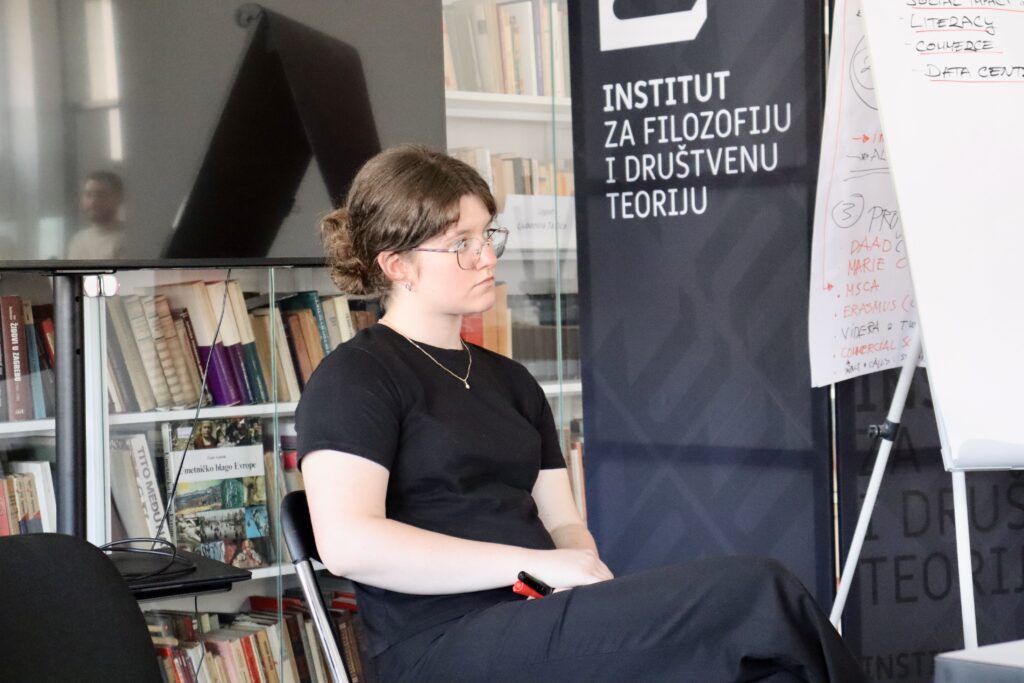
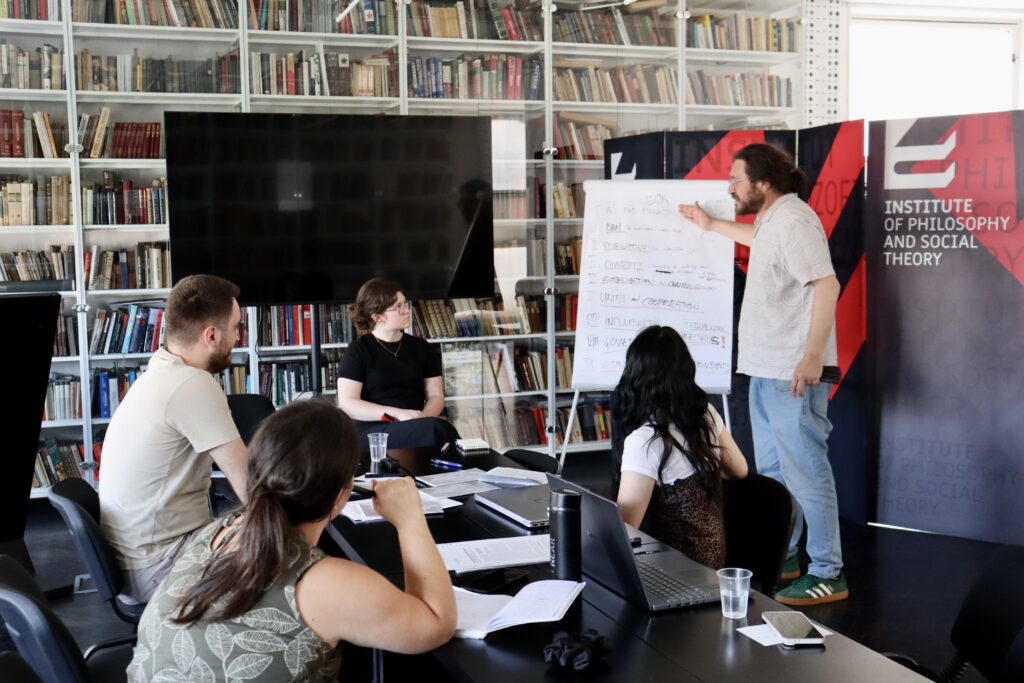
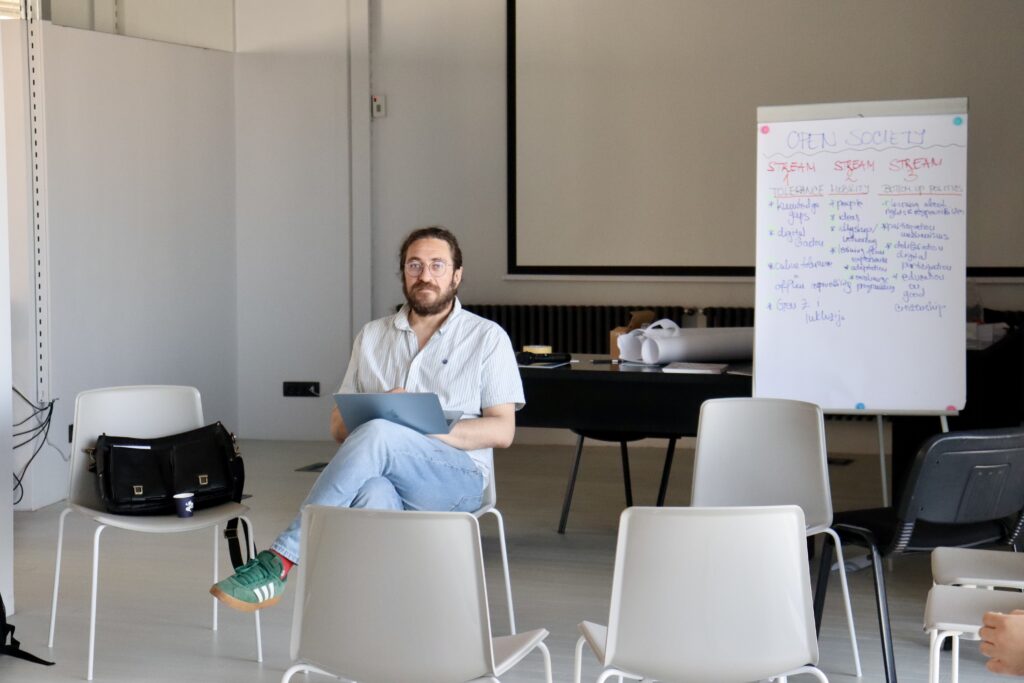
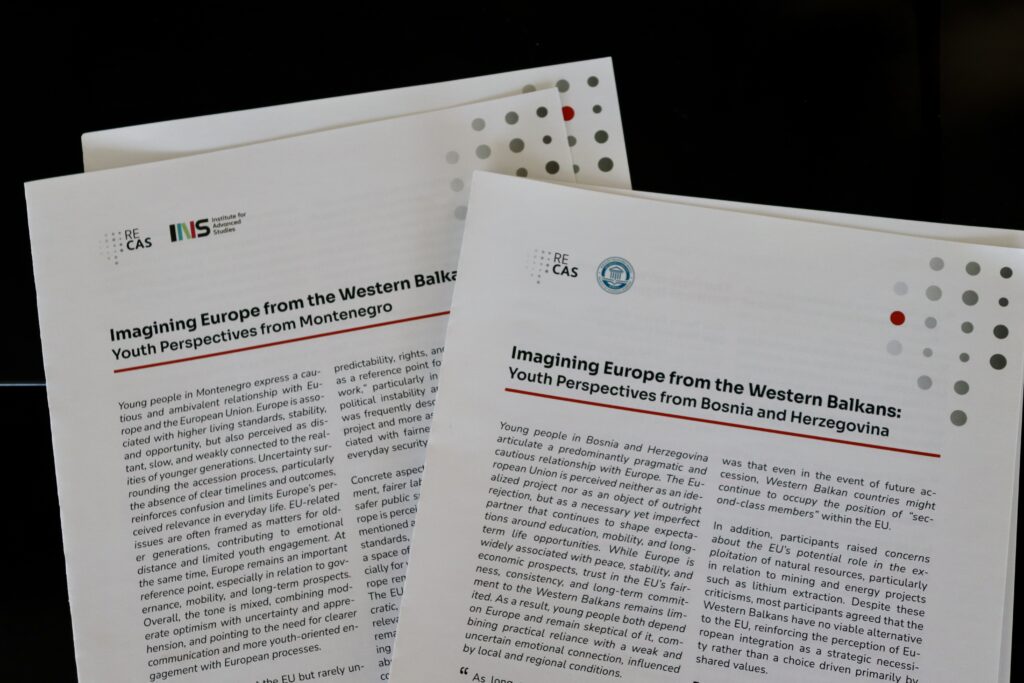
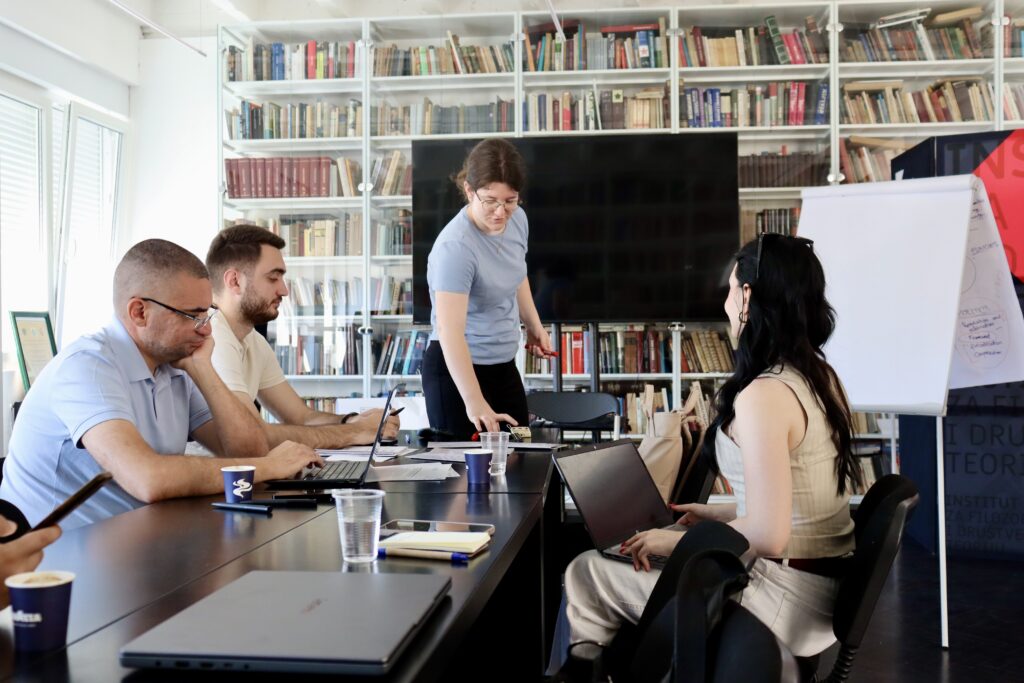
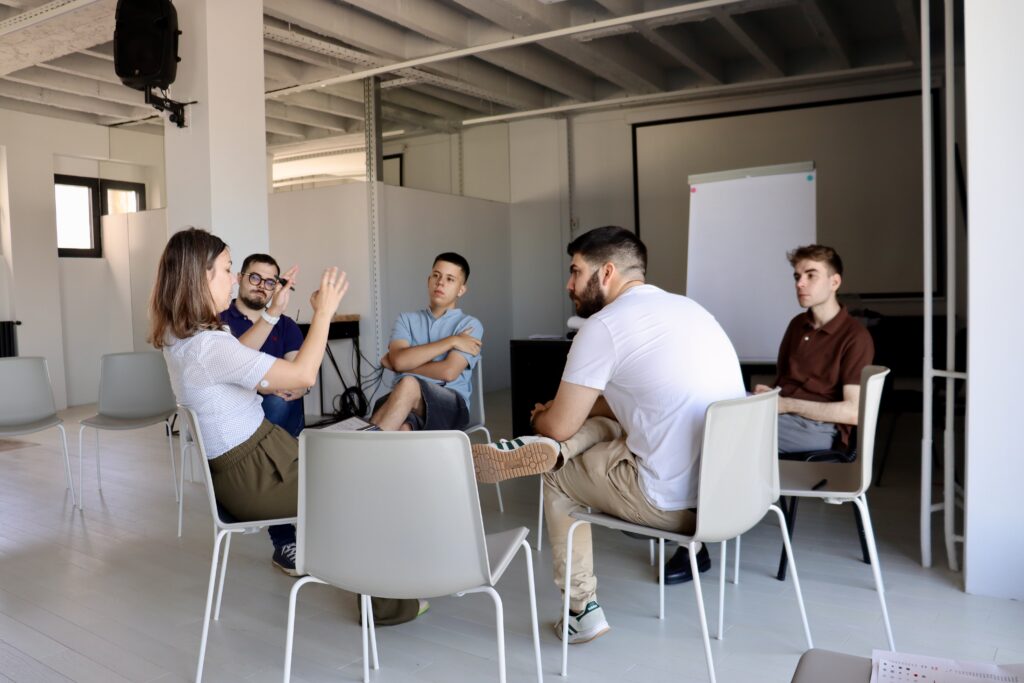
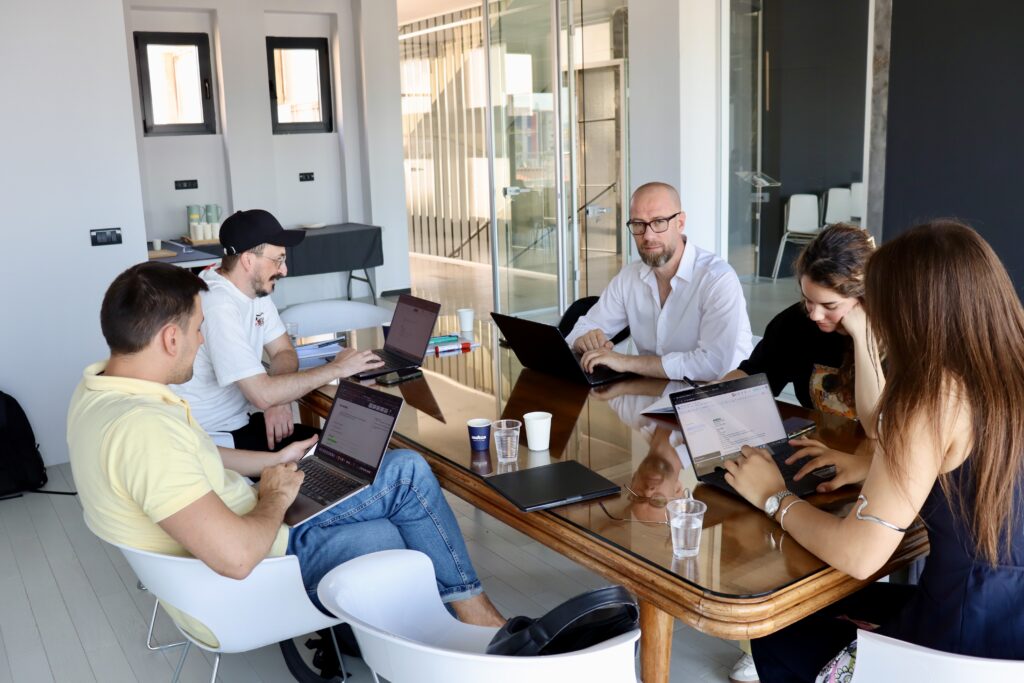
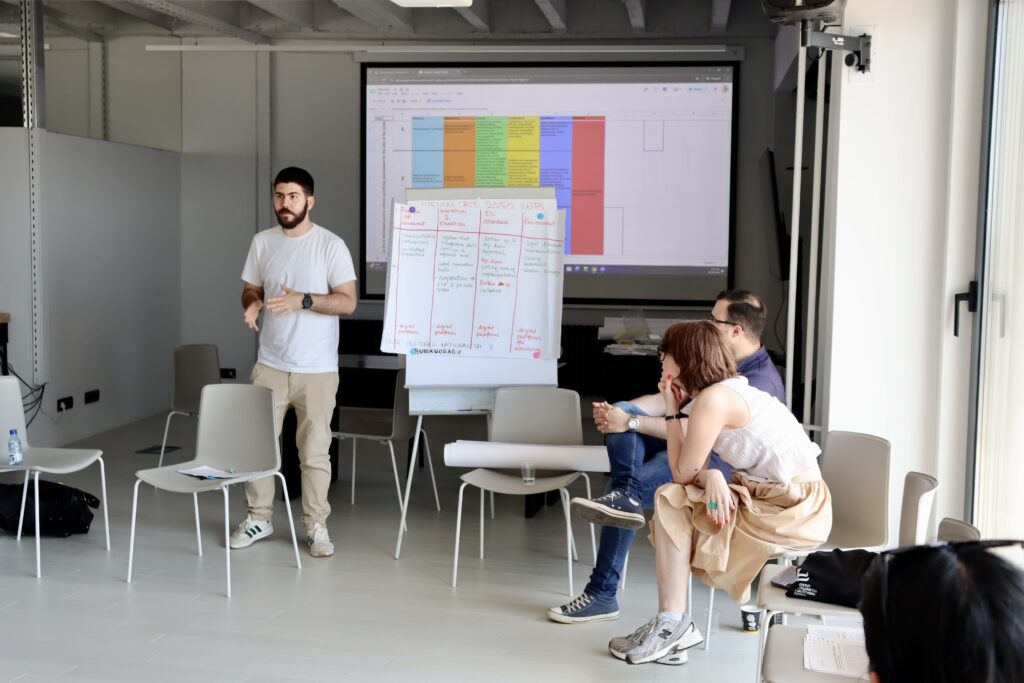
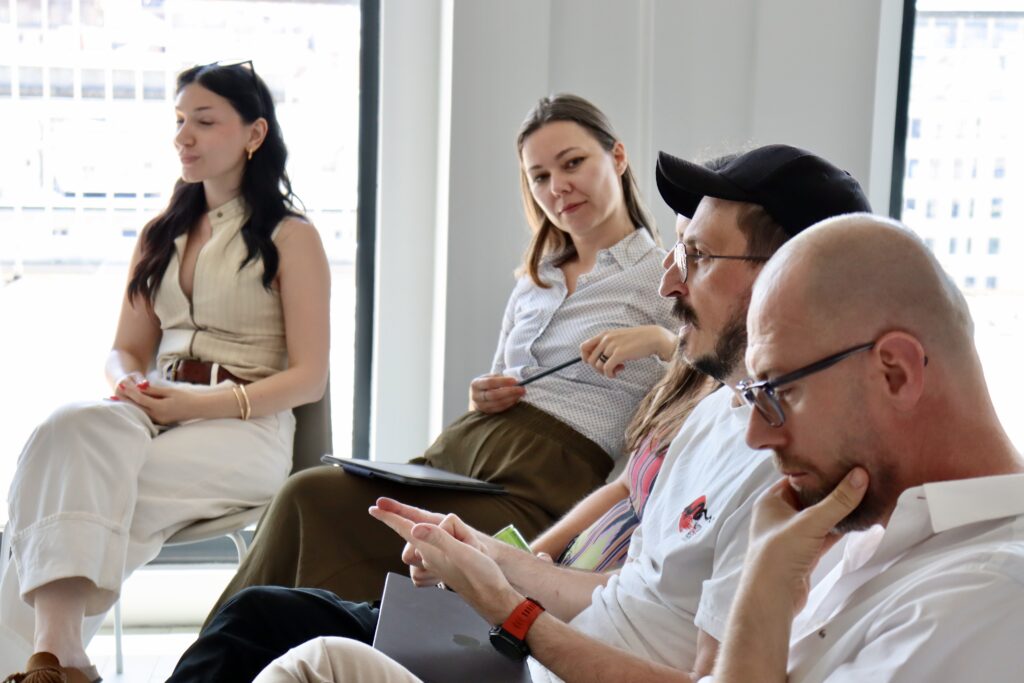
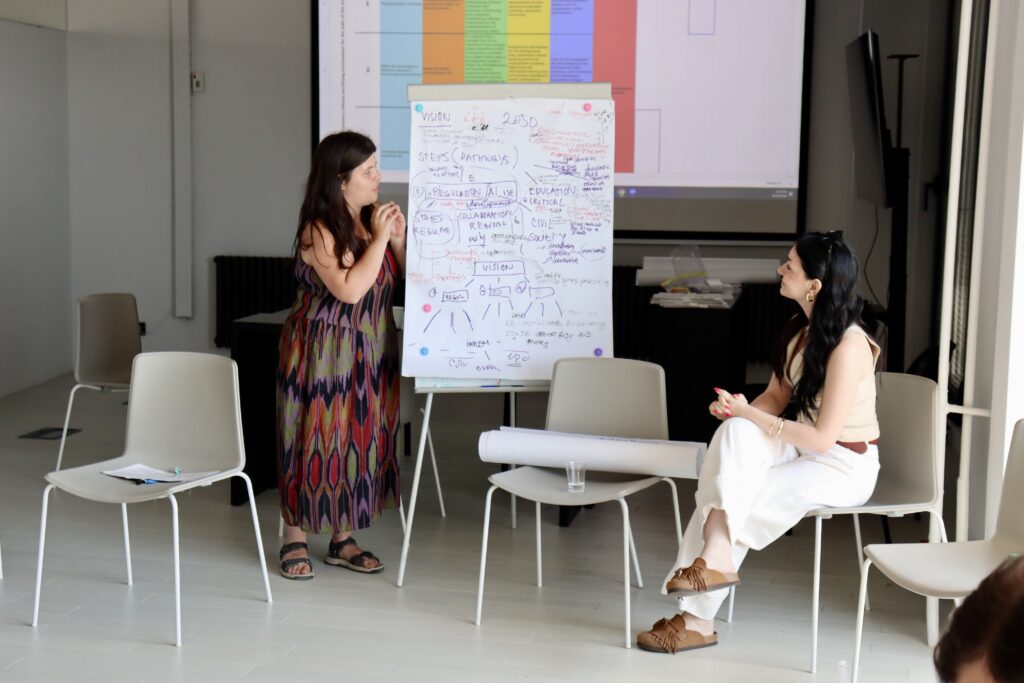
On 9 and 10 June, the Institute for Philosophy and Social Theory (IFDT) in Belgrade hosted a two-day Policy Hackathon organised as part of the RECAS project. The event brought together RECAS fellows and alumni, participants from student groups involved in deliberative workshops, and young researchers and practitioners from across the Western Balkans.
The hackathon was designed as an experimental, hands-on format aimed at connecting research, policy thinking, debate, and collective output production. Over two intensive days, participants explored how young people in the region imagine democratic, political, and eco-digital futures, and how these imaginaries relate to existing policy frameworks and institutional responses.
During the first day, participants worked on reconstructing different policy narratives and theories of change, drawing on insights from RECAS research, deliberative workshops, surveys, and policy analyses. They examined how different approaches frame the path to change, what kinds of futures they make visible, and which assumptions about institutions, participation, markets, technology, and democracy underpin them.
Based on this mapping, participants developed several distinct policy positions, each grounded in a coherent theory of change. These positions were supported through the preparation of key arguments, empirical and academic evidence, existing policy measures, institutional frameworks, strategic proposals, and anticipated outcomes.
On the second day, these positions were presented and tested through a moderated policy debate. The debate served as a space for participants to challenge assumptions, refine arguments, assess the feasibility of different approaches, and collectively reflect on the possibilities and limits of policy change in the Western Balkans.
A central feature of the hackathon was its focus on concrete outputs. Rather than treating discussion and production as separate stages, participants worked throughout the process on developing policy content that was gradually clarified, contested, and strengthened through collaboration and debate.
Facilitated by Srđan Đurović (IFDT, RECAS Fellowship mentor), the hackathon created a dynamic space for exchange among young people, researchers, and regional participants. It also offered an opportunity to experiment with new forms of knowledge production that move beyond traditional academic and policy formats, placing collective thinking, participation, and regional dialogue at the centre of the process.