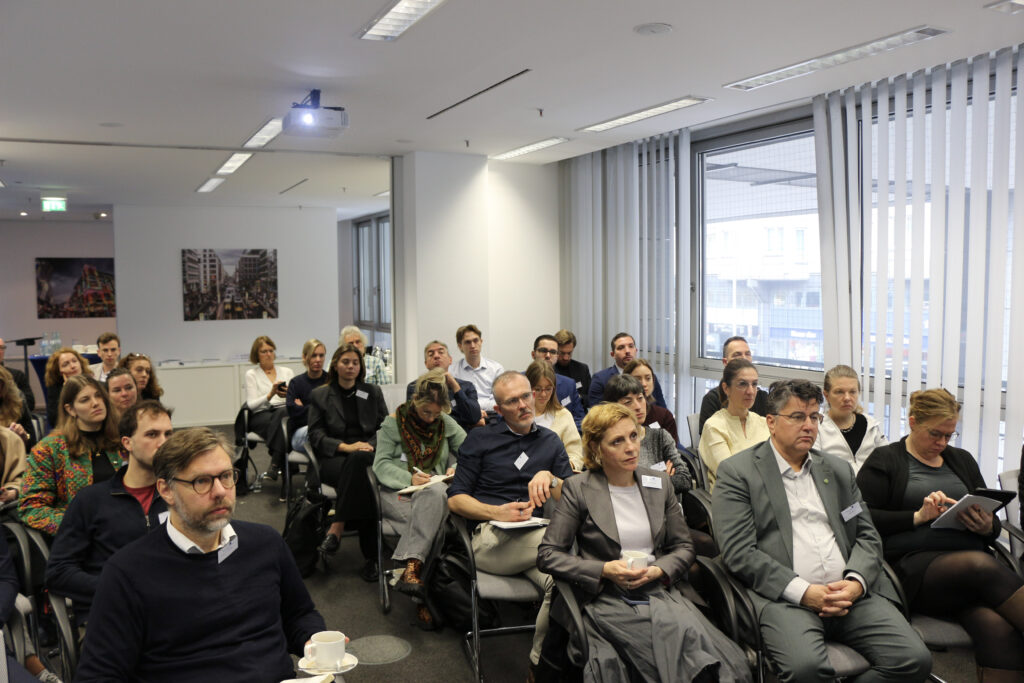
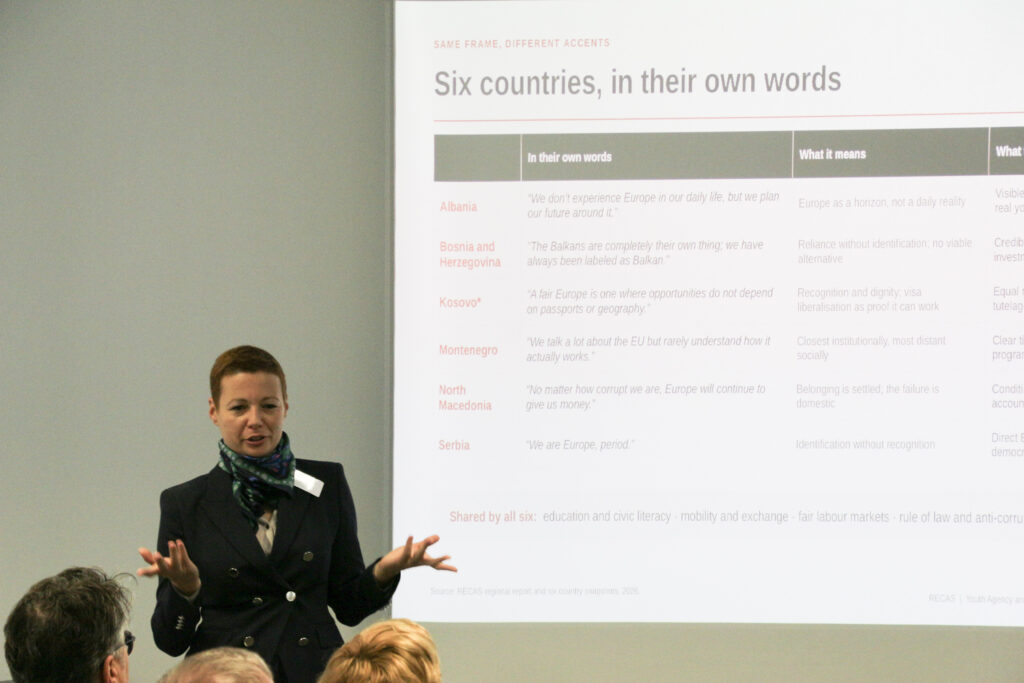
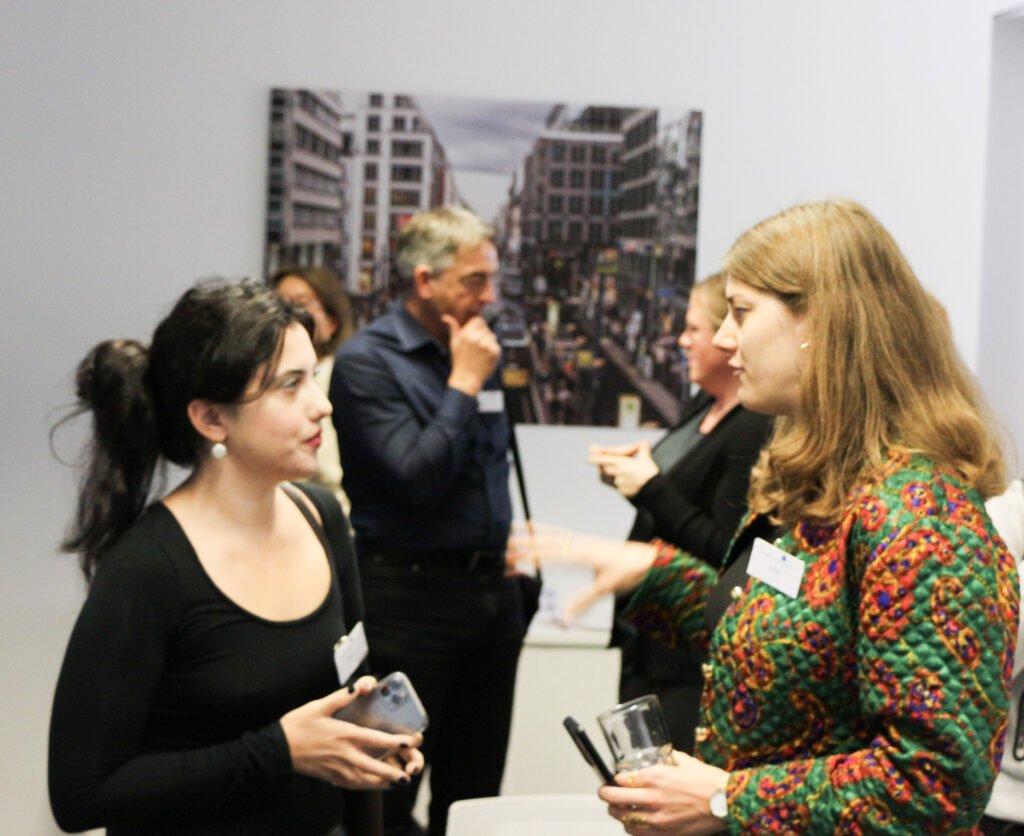
On 15 October 2026, the Regional Center for Advanced Studies of Humanities (RECAS) and the Aspen Institute Germany brought together researchers, policy experts and political representatives in Berlin for a breakfast discussion on “Generation Waiting? Gen Z, Democratic Mobilization, and the Future of EU Enlargement in the Western Balkans.”
The event explored the connections between the renewed geopolitical urgency of EU enlargement, democratic developments in the Western Balkans and the political engagement of a new generation. It took place against the backdrop of student-led protests in Serbia and an uneven enlargement process across the region.
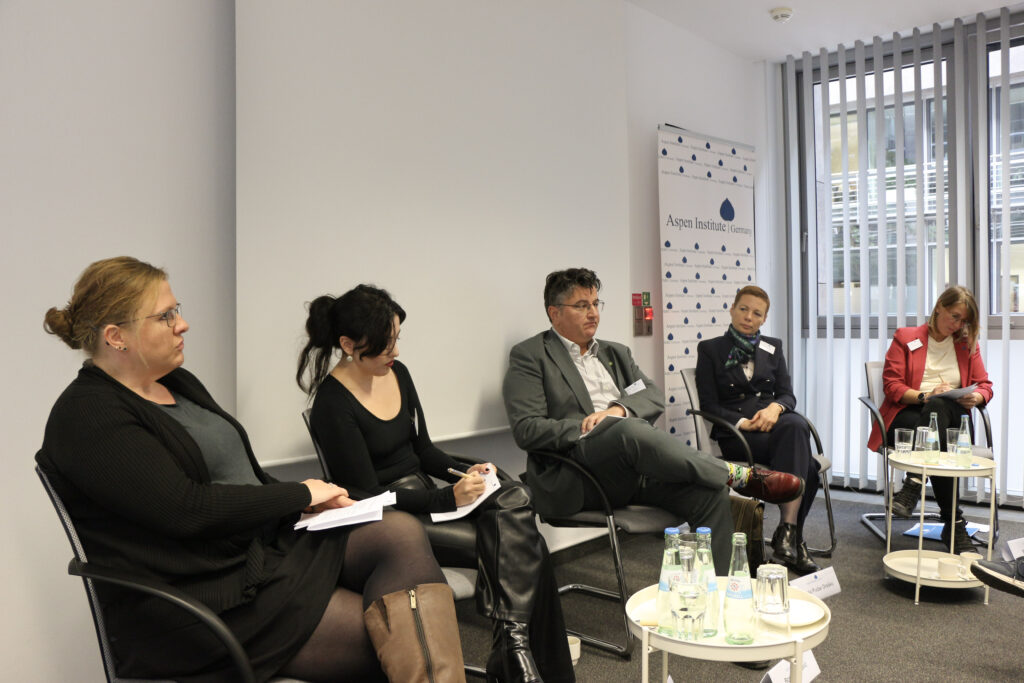
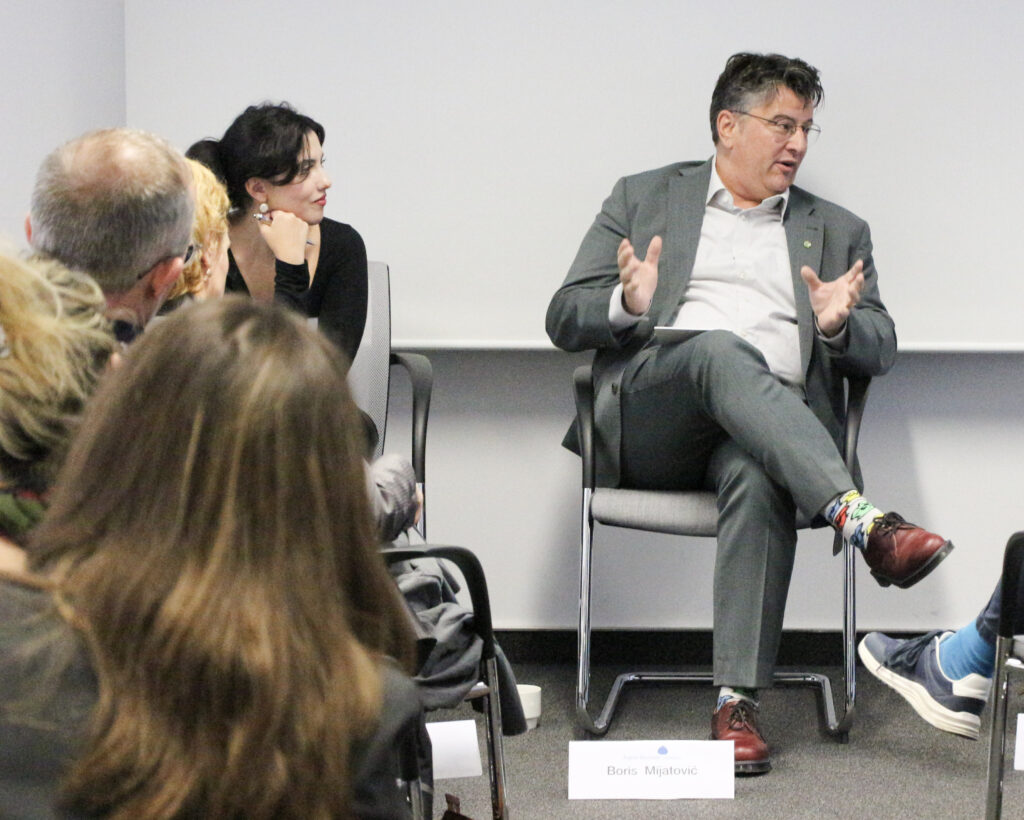
Gazela Pudar Draško, from the Institute for Philosophy and Social Theory at the University of Belgrade and RECAS, joined Gresa Hasa, University of Graz; Valeska Esch, German Institute for International and Security Affairs (SWP); and Boris Mijatović, member of the German Bundestag. The discussion was moderated by Rejane Herwig, Program Director Europe at the Aspen Institute Germany.
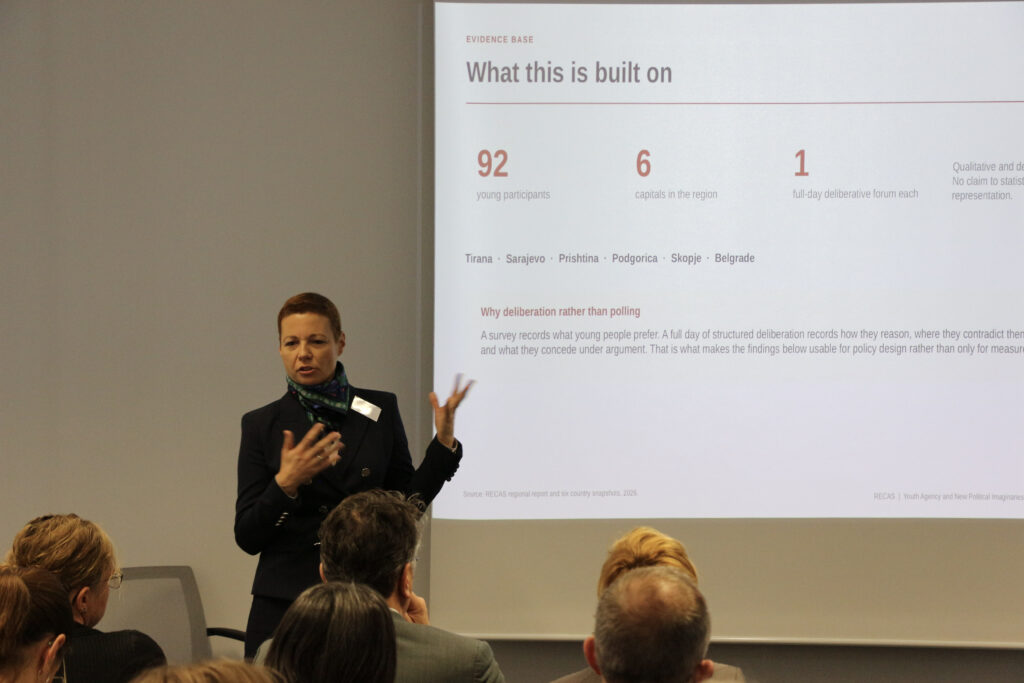
The discussion drew on the study Youth Perceptions of Europe in the Western Balkans: Key Regional Patterns and Implications, authored by Irena Fiket, Nemanja Anđelković and Gazela Pudar Draško and published by the Institute for Philosophy and Social Theory. Based on deliberative workshops with 92 young people in the six Western Balkan capitals, conducted in partnership with RECAS, the study examines how young people understand Europe and their place within it.
Its findings present a generation that often identifies strongly with European values while expressing frustration with the EU’s actions and the realities of domestic governance. Young participants called for opportunities to shape decisions that affect their future, moving beyond consultation towards meaningful participation and co-creation.
The event invited reflection on how the EU and its member states can respond to youth and student mobilisation, strengthen democratic legitimacy and make enlargement credible for a generation that has grown up with prolonged accession processes and recurring crises.
The discussion was organised by the Aspen Institute Germany in cooperation with RECAS and supported by the Open Society Foundations – Western Balkans.