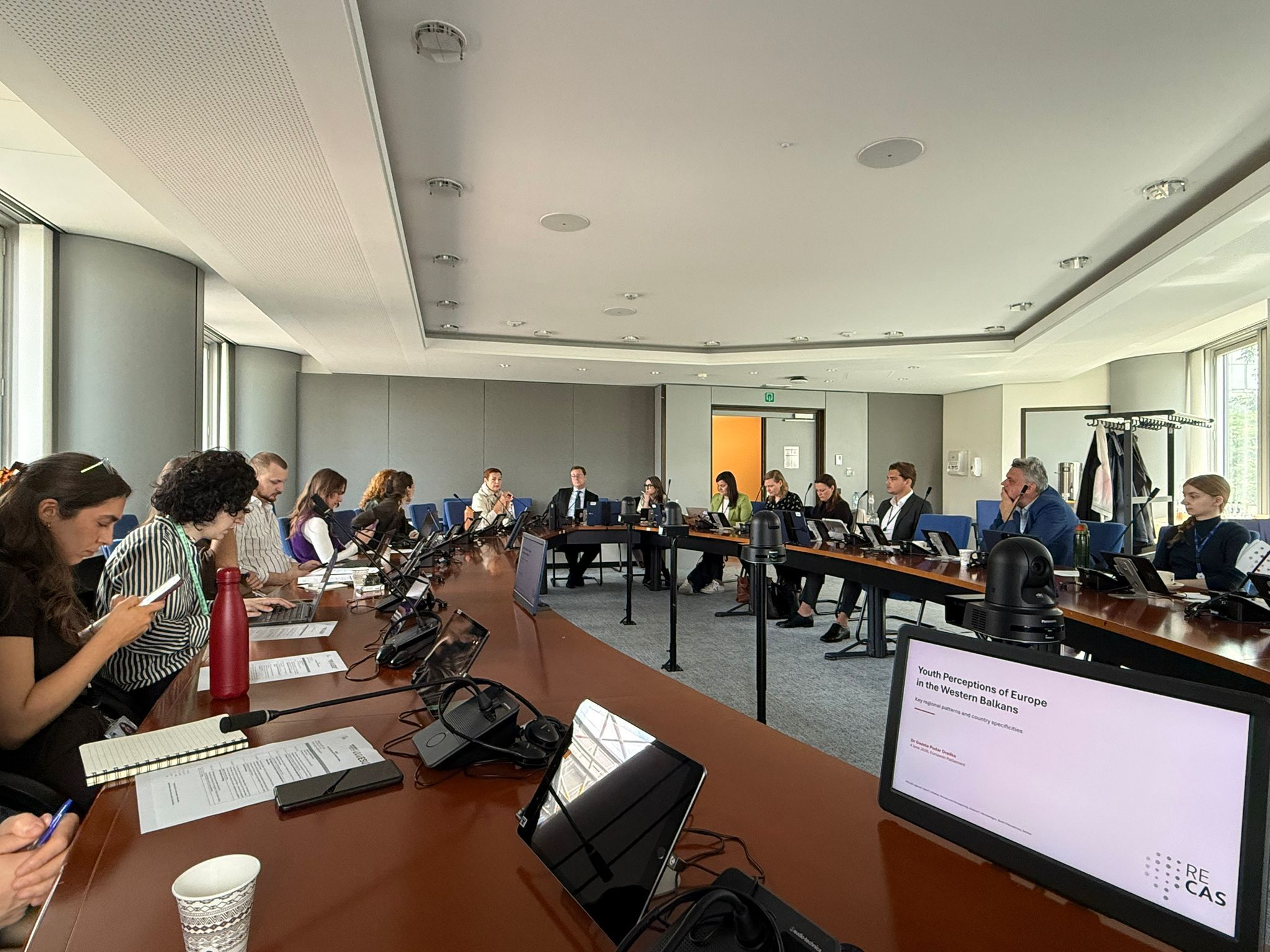
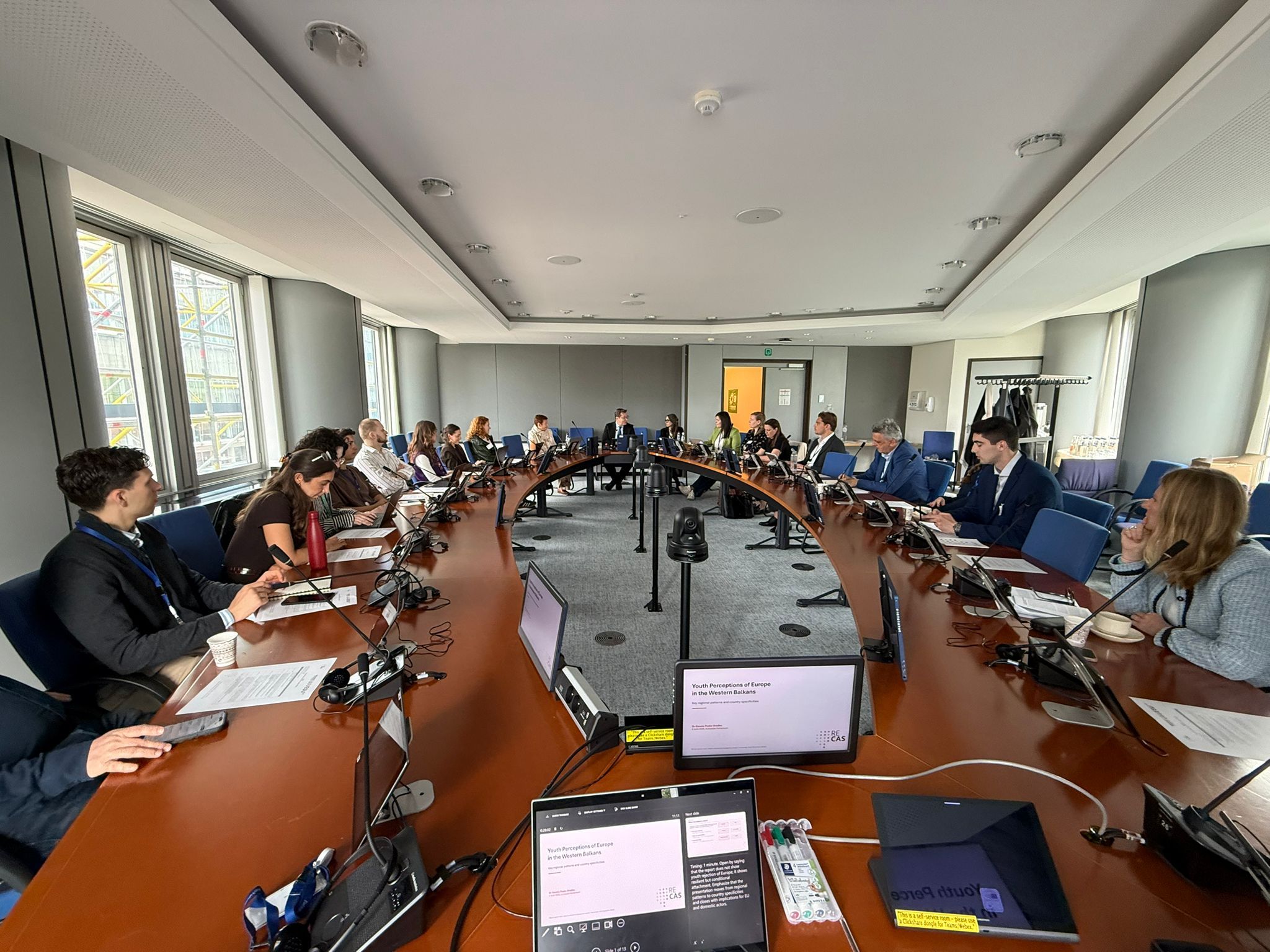
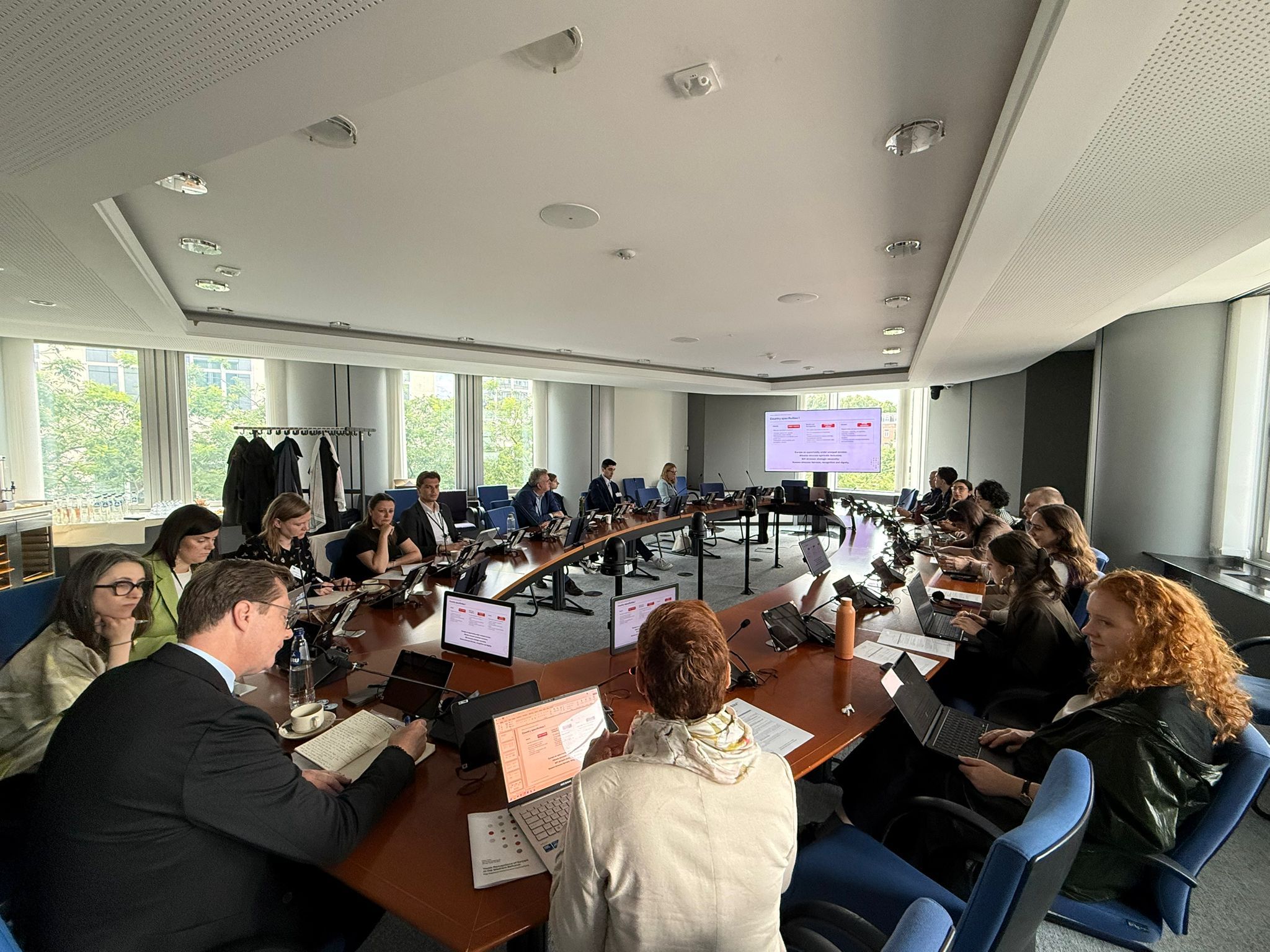
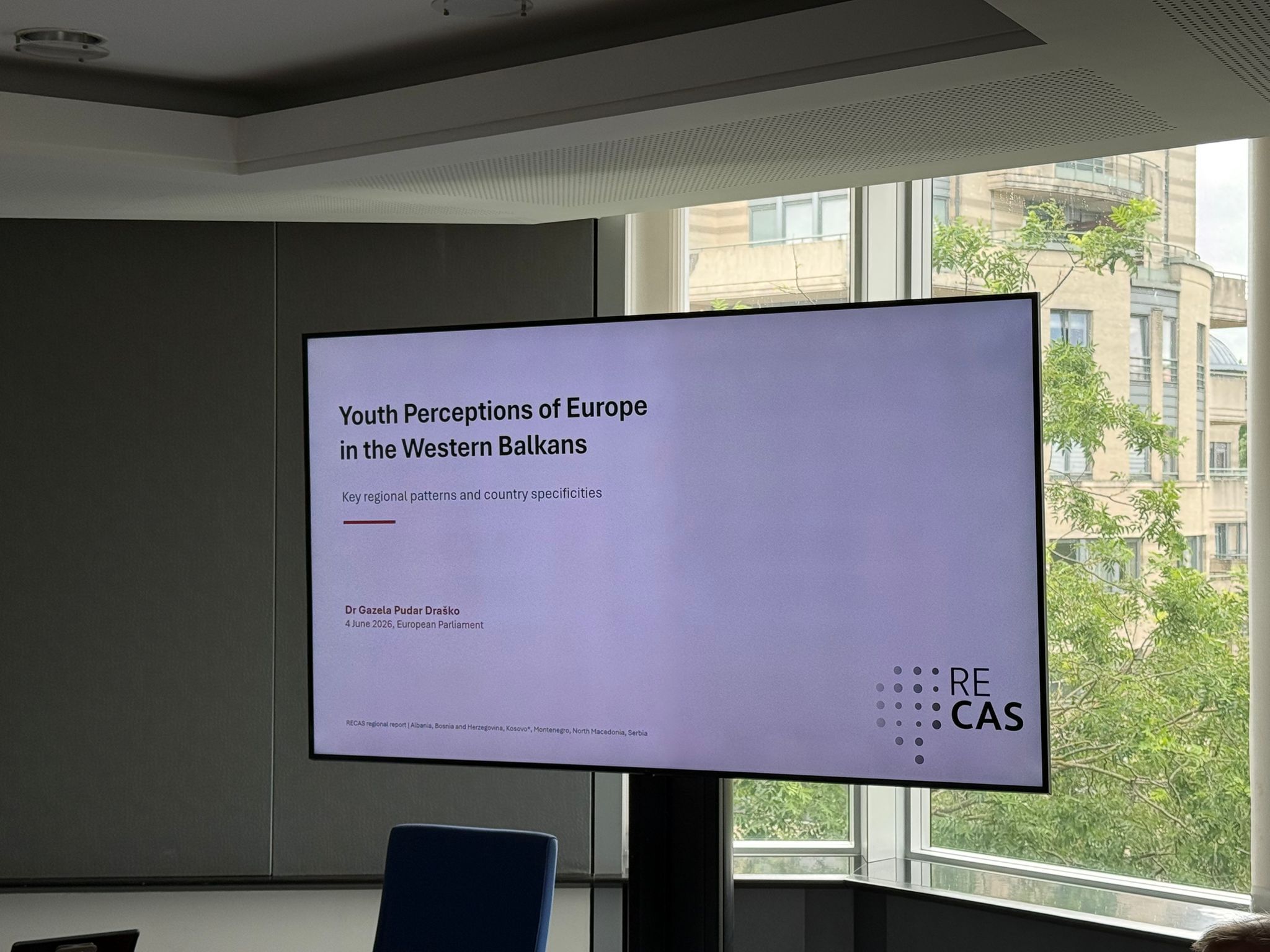
On 4 June 2026, the European Parliament in Brussels hosted the event Youth Imagining Europe from the Western Balkans, bringing together researchers, policymakers, civil society representatives, and youth experts to discuss how young people across the region perceive Europe, democracy, and their own role in shaping the future of the Western Balkans.
The event was hosted by Member of the European Parliament Vladimir Prebilič (Greens/EFA) and took place at a particularly significant moment for EU–Western Balkans relations, amid renewed discussions on enlargement and the future of European integration.
Opening the discussion, Gazela Pudar Draško (Institute for Philosophy and Social Theory, University of Belgrade / RECAS Network) reflected on why youth perspectives from the Western Balkans matter today, emphasizing that questions of European integration are not only institutional and geopolitical, but also generational. She highlighted the importance of understanding how young people imagine Europe, political participation, and democratic change in a region facing profound political, economic, and social transformations.
The central part of the event was dedicated to the presentation of findings from the regional research project Youth Agency and New Political Imaginaries in the Western Balkans. Based on deliberative workshops conducted with young people across the region, the study explores perceptions of Europe, democracy, participation, and regional futures, offering insight into the views of a generation that will shape the future trajectory of the Western Balkans.
The discussion was enriched by several complementary perspectives. Lura Limani (Open Society Foundations – Western Balkans) presented key insights from the regional survey Democracy Pulse: Gen Z in the Western Balkans, placing the findings in a broader regional context. Ajda Hedžet (University of Ljubljana / RECAS Fellow) reflected on the importance of understanding the different interpretative frameworks through which young people approach concepts such as democracy, participation, Europe, and political engagement. She emphasized the need for researchers, policymakers, and institutions to move closer to the language, experiences, and meanings through which young people themselves understand political and social realities. Marta Markowska, EU Youth Coordinator at the European Commission, highlighted existing European Union initiatives aimed at strengthening youth participation and engagement, including the EU Youth Dialogue and other mechanisms designed to bring young people’s voices closer to policymaking processes at the European level.
The event concluded with an open discussion on the implications of the findings for EU–Western Balkans relations, youth participation, and future policy development. Participants emphasized that meaningful engagement with young people requires not only listening to their concerns, but also creating institutional channels through which their perspectives can inform democratic processes and public policy.