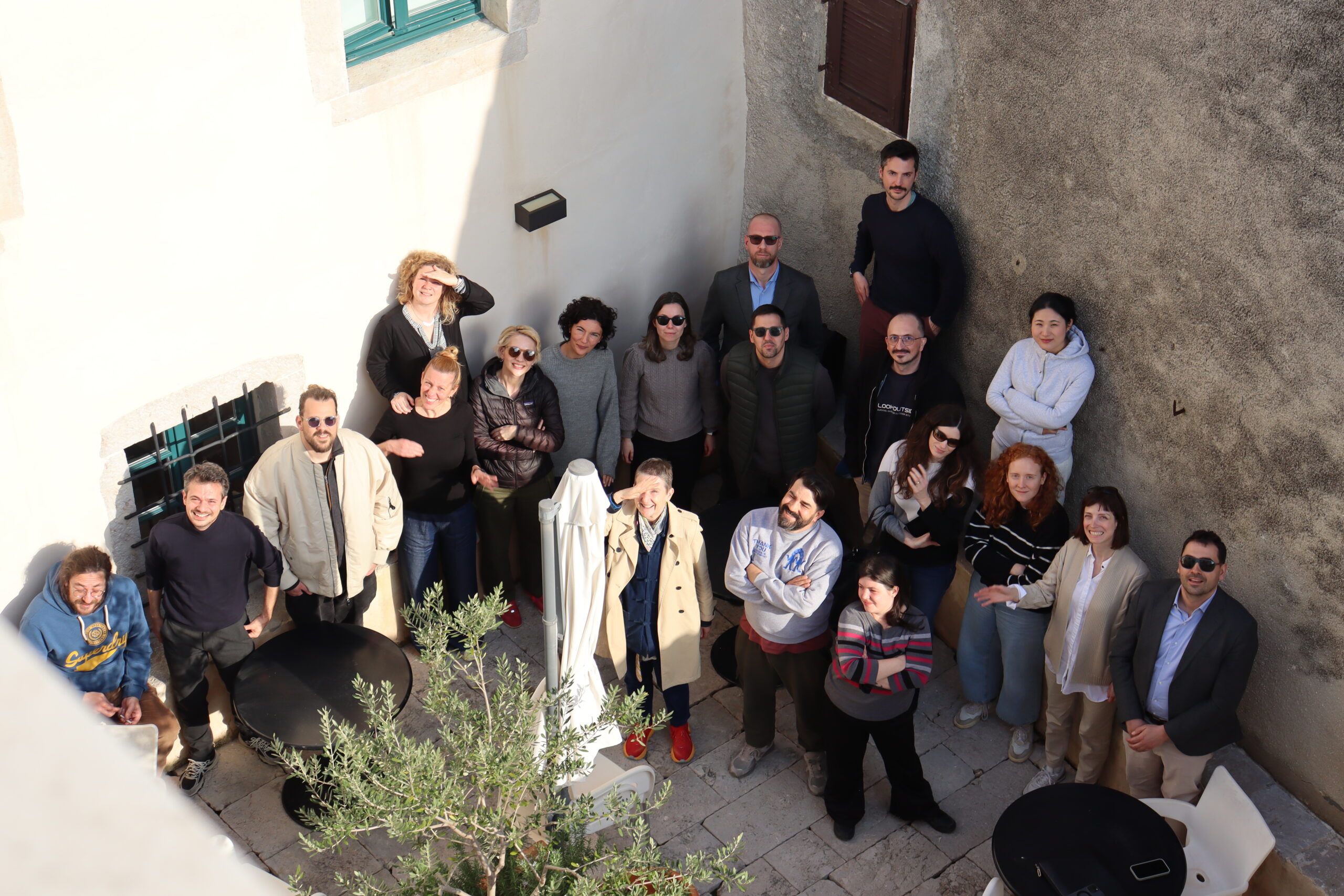
Held at Moise Palace on Cres Island from 9 to 14 March 2026, RECAS Surgery Week brought together fellows and mentors for a residency centred on three days of presentations, feedback, and shared reflection. Through focused discussion and interdisciplinary exchange, fellows had the opportunity to present their ongoing research, test ideas, and further develop their projects in conversation with peers and mentors.
The first day opened with projects focused on youth, democracy, digital agency, and climate activism in Southeast Europe. Nemanja Batrićević presented research on democratic belief systems across the Western Balkans, examining how youth visions of democracy relate to political participation and resilience to democratic backsliding. Borjan Gjuzelov explored the democratic potential of digitally embedded Gen Z, while Anastas Vangeli introduced a framework for understanding how young people in the Balkans imagine the future through mobility, belonging, and uncertainty. Jing Wu presented research on youth climate activism in Slovenia, and Đorđe Krivokapić concluded the day with Resistance Protocol, a tabletop simulation exploring youth agency under digital authoritarianism.
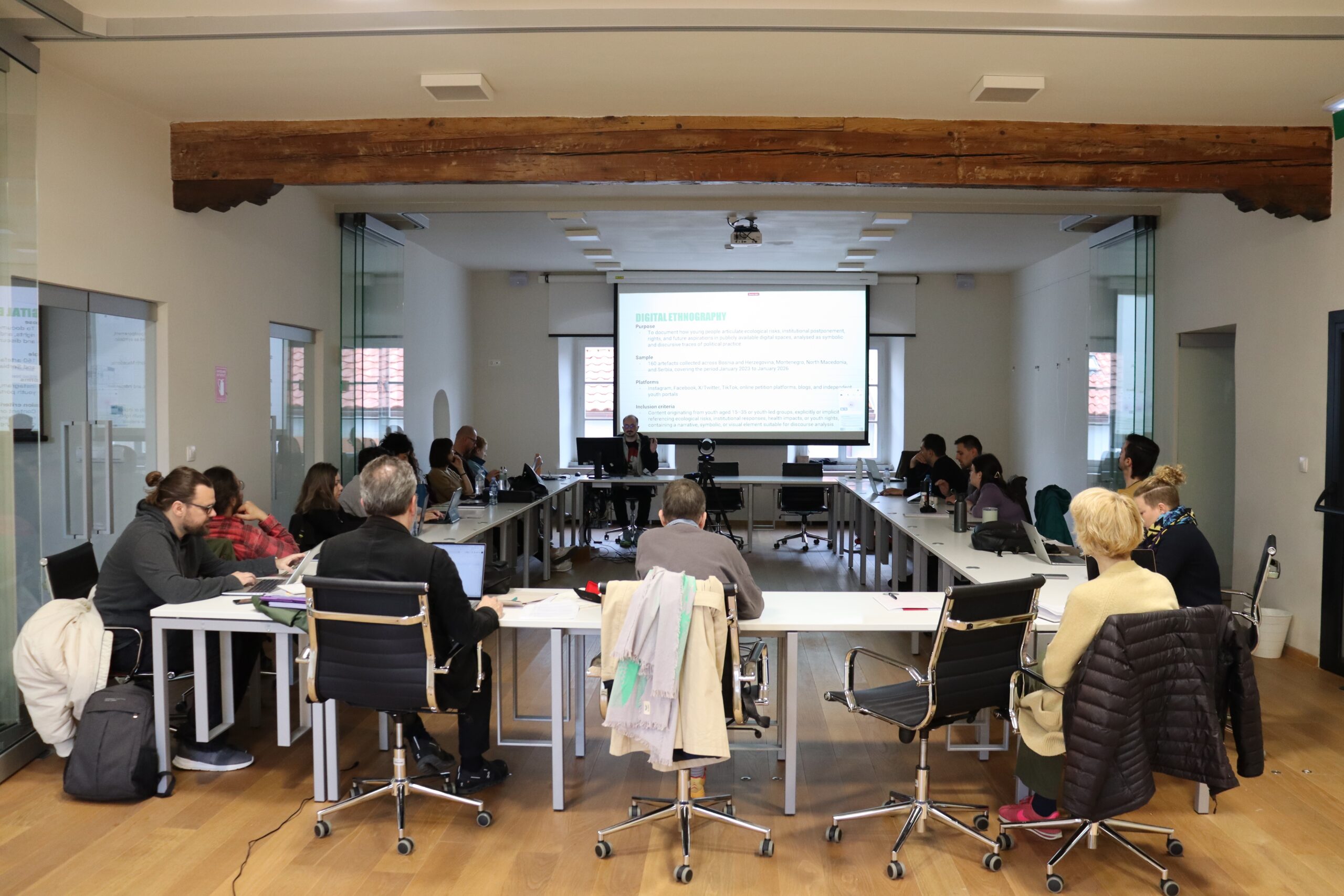
The second day continued with projects addressing eco-digital politics, cultural futures, migration, and youth agency. Srđan Kukolj examined how environmental risks and delayed institutional responses shape youth understandings of rights and justice in the Western Balkans. Aleksandra Bajde focused on ecological futures in art and cultural production, while Vehap Kola presented a longitudinal study of eco-digital imaginaries and the different pathways through which young people relate to the future. Dragana Mrvoš examined the political dimensions of transnational mobility among young migrants from Serbia and Croatia, and Vanja Ashkapova explored youth migration futures in North Macedonia using participatory foresight methods.
On the final day, fellows turned to questions of resistance, digital spaces, language, migration, and solidarity. Ajda Hedžet presented a project on constructive resistance and youth political imagination in Southeast Europe. Ana Gavrilović examined video games as spaces of civic expression and political resistance, while Anxhela Lepuri explored how young people in Prishtina use metaphors to describe democracy, EU integration, and imagined futures. René Bogović discussed new minority speakers and changing ethnolinguistic boundaries among youth in Croatia, and Julija Perhat presented research on slurs, language, and belonging among young people in Croatia and Serbia.
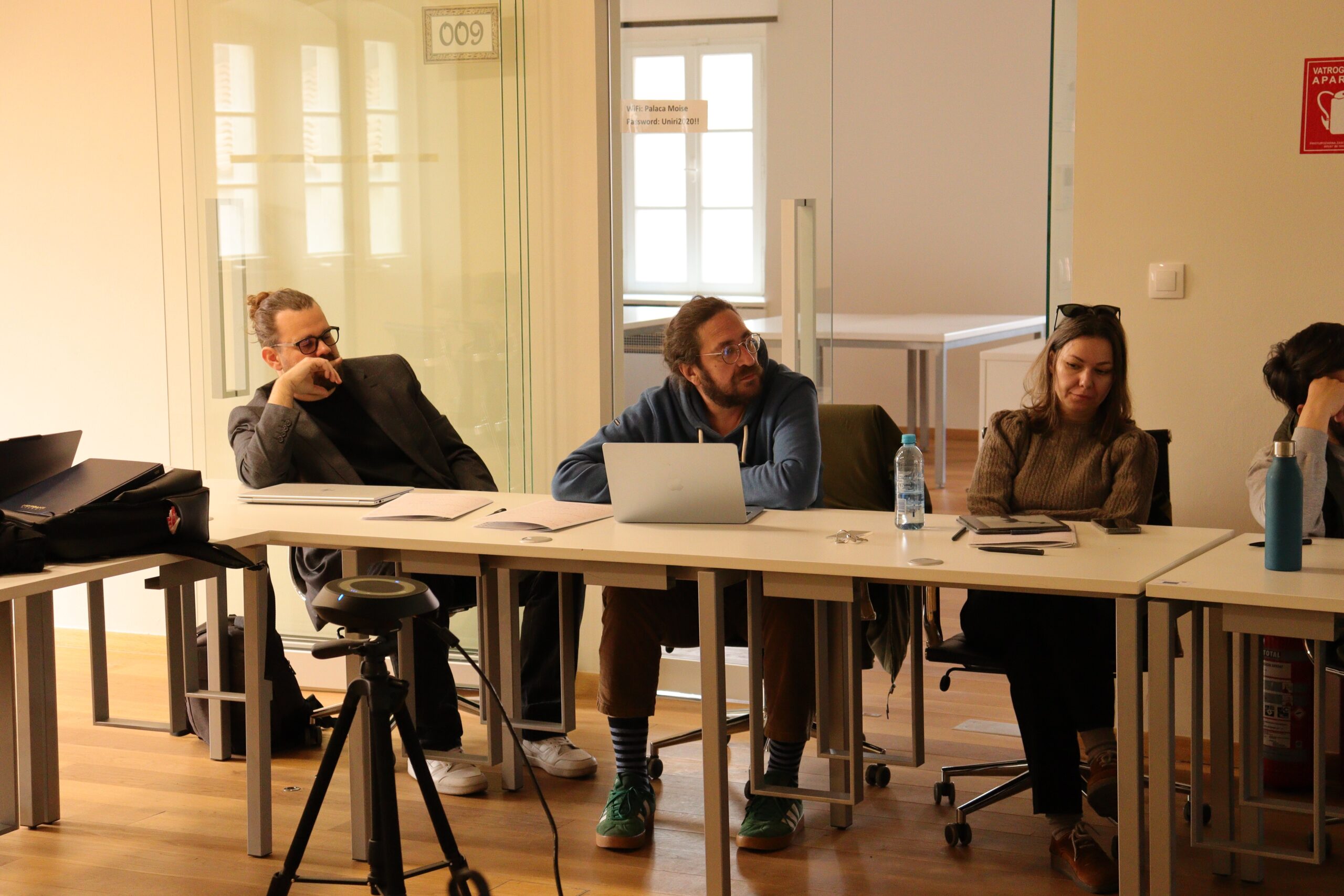 Across all three days, the presentations reflected the shared thematic focus of the RECAS Fellowship on youth imaginaries, democratic futures, and social change in Southeast Europe. Surgery Week once again offered fellows an opportunity to test ideas, refine arguments, and receive thoughtful feedback in conversation with peers and mentors from different disciplinary backgrounds. Alongside the formal sessions, the week also created space for informal conversations and collegial exchange, strengthening ties across the network and supporting the collaborative spirit at the core of RECAS.
As the residency in Cres comes to a close, the discussions and insights developed during Surgery Week will continue to shape the next stages of the fellows’ work, from research and writing to future exchange across the wider RECAS community.